5 hearing aid roadblocks (and how to get over them)
What’s holding you back from wearing hearing aids? Learn some common reasons people resist getting devices.

Nearly 40 million Americans have some degree of hearing loss.1 But many of them don’t get treatment. Only about 16% of adults ages 20–69 who could benefit from hearing aids actually wear them.
Maybe that describes you. You suspect you have hearing loss, or you’ve already been diagnosed. But you’re resisting the idea of wearing hearing aids, even though you know you need them.
Here are 5 common roadblocks that hold people back — and how to get past them so you can begin to hear clearly again.

Get more out of every day
Changes in hearing can be subtle at first. Find out if hearing loss may be interfering with your life.
1. You worry that hearing aids cost too much
It’s true that hearing aids can be expensive. The average price of prescription hearing aids can range from $1,000 to $4,000.2 Worries about the cost may cause people to delay getting treatment.
Surveys bear that out. In a recent survey by UnitedHealthcare Hearing, concern about the cost of hearing aids was the top reason why people with hearing loss waited to get devices.
But hearing aids may be more affordable than you think. Many options on the market today offer a good mix of value and high technology. Plus, your health insurance may cover some of the costs.
Let your hearing care professional know that cost is a concern. They can work with you to find hearing aids that fit your budget. One excellent value option? Relate®, a private-label hearing aid brand accessed exclusively through UnitedHealthcare Hearing. Relate devices offer top-notch technology at an affordable price.
2. You don’t think your hearing is that bad
It can be hard to admit that your hearing isn’t as sharp as it used to be. You might not even realize it yet. But there are subtle signals of hearing loss to keep on your radar.
For example, your spouse complains that you turn the TV volume too loud. Or you have trouble hearing conversations in a group. Or you keep asking people to repeat themselves.
“Most of the time it’s not even the patients themselves who are feeling like there’s something wrong. It’s their spouses or their kids,” says Seth Weible, Au.D. He’s an audiologist and the practice director at Manhattan Audio South in New York City. In either case, it’s a good idea to get a hearing exam with a hearing care professional.
You’ll be tested on how well you hear tones at various volumes. Your hearing care professional will also check how well you hear and understand words, especially when there’s background noise.
“That’s the portion of the test where a lot of people start to realize they’re struggling and missing a lot of words,” says Weible.
Even with mild hearing loss, most people lose the ability to hear high-frequency sounds, like kids’ voices. Hearing aids can help you hear those sounds more clearly.
3. You tried hearing aids once and didn’t like them. So why try again?
It does take some time to get used to hearing aids. For one thing, your brain has to get adjusted to hearing sounds you may not have heard for years. Even your own voice may sound louder inside your head at first.
A hearing care professional can break down exactly what you didn’t like about your last pair. Was it the loudness? Did the devices buzz or click? Did they hurt your ears?
Sometimes that takes some trial and error. The price of the devices usually includes a fitting and several follow-up visits to get a fit you’re comfortable with. Plus, your hearing care professional should give you instructions on what to do in the first few days and weeks to get used to your hearing aids.
Ready to request a hearing exam and consultation? UnitedHealthcare Hearing has a wide network of hearing care professionals. Find a provider.
4. You’ve heard hearing aids don’t really work that well
Maybe you don’t think hearing aids would make a difference. One of the reasons people don't get devices is that they aren’t sure whether hearing aids work well, especially in noisy situations, according to a 2025 European survey.3
Hearing aids won’t restore your normal hearing. But they could improve it so you can better understand conversations, directions and other sounds.4
Plus, with AI-powered chips, many hearing aids can now mimic the brain’s ability to process sounds. This means the hearing aids help you distinguish conversations no matter how noisy the background. Or help you hear sounds from all directions. (UnitedHealthcare Hearing offers a variety of hearing aids with the latest technology, including AI-powered chips.)
5. You’re worried that hearing aids will make you look old
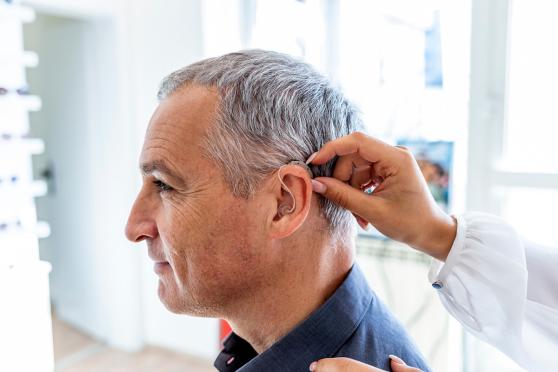
Hearing aids have come a long way. Many of today’s behind-the-ear devices are nearly invisible, so other people may not even realize you’re wearing them.
Talk to your hearing care professional about your concerns. They can help you choose a discreet option. Some prescription hearing aids come in shades that match your hair color or skin tone, for example. That helps them blend in. Another option for some people? In-the-ear hearing aids that look like earbuds. This type of device is available in both prescription and over-the-counter models.
Try to adjust your mindset, too. Remind yourself that hearing well is good for your overall health and well-being. When you hear well, it’s easier to take part in social events, chat with your family and connect to the world around you. Plus, good hearing can lead to fewer falls and accidents.5
Hearing well may also keep your brain healthy. Treating hearing loss helps lower the risk of memory and thinking problems.
So, no matter what’s holding you back from getting hearing aids, take the first step and request an appointment with a hearing care professional.
Sources
- Quick statistics about hearing, balance,& dizziness National Institute on Deafness and Other Communication Disorders. Accessed June 12, 2026.
- The price of hearing aids Hearing Industries Association. Accessed June 12, 2026.
- 10 reasons people still aren’t getting hearing instruments The Hearing Review. Accessed June 12, 2026.
- Frequently asked questions about hearing aids Johns Hopkins Medicine. Accessed June 12, 2026.
- The hidden risks of hearing loss Johns Hopkins Medicine. Accessed June 12, 2026.
Clinically reviewed
Published July 28, 2026
Information is for educational purposes only and is not a substitute for the advice of a licensed medical provider. Consult your provider prior to making changes to your lifestyle or health care routine.
Network size varies by market.